
Views: 0 Author: Site Editor Publish Time: 2026-08-12 Origin: Site
Selecting the wrong industrial valve leads directly to catastrophic pipeline leaks. Unplanned system downtime and heavy compliance failures often follow poor equipment choices. Engineers face constant daily pressure to get pipeline specifications right the first time. The Flanged Butterfly Valve serves as the definitive standard for high-vibration, large-diameter, or dead-end applications. These heavily demanding environments make robust pipe-to-valve connections absolutely non-negotiable. Standard wafer-style valves simply cannot withstand severe line stresses without buckling or leaking over time.
You need a highly reliable framework to evaluate these heavy-duty valves properly. This comprehensive guide breaks down mechanical design selection, critical engineering criteria, and essential installation practices. We provide vendor-neutral, field-tested insights to help you secure long-term system integrity. You will learn exactly how to match the right internal design to your specific flow media.
Primary Advantage: Flanged butterfly valves excel in heavy-duty applications, dead-end service, and environments with high pipeline stress, offering superior structural rigidity compared to wafer or lug types.
Design Selection: Choosing between concentric, double-offset, and triple-offset designs depends entirely on fluid media, temperature range, and zero-leakage requirements.
Installation Risk: 80% of premature seat failures stem from improper installation, specifically poor flange alignment and incorrect torqueing sequences.
Piping engineers constantly balance long-term reliability against strict installation constraints. You might wonder why seasoned professionals specify heavy flanged units over lighter alternatives. The answer lies strictly in overall structural integrity. Industrial pipelines experience extreme thermal expansion and mechanical vibration daily.
A double-flanged body effectively absorbs this continuous line expansion. It handles extreme pipe stress safely without transferring heavy loads internally. This critical absorption prevents dangerous physical distortion of the outer valve body. It also keeps the internal seating surface perfectly aligned. Wafer valves rely on long bolts stretching across the entire valve body. Thermal cycles cause these long bolts to stretch and relax repeatedly. This stretching leads to eventual gasket leaks. Flanged designs eliminate this major structural weakness entirely. You bolt the pipe directly to the valve's integral flange. Short, rigid bolts secure the connection tightly. This design isolates pipe vibration perfectly.
Dead-end service represents another major engineering factor. Flanged connections allow you to perform downstream maintenance safely. You do not need to depressurize the entire upstream system. You simply unbolt the downstream side securely. The valve itself holds back the live line pressure independently.
However, we must acknowledge the transparent trade-offs clearly.
You will deal with heavier component weight during field rigging.
You must accommodate much larger face-to-face dimensions in your layout.
These bulky units require higher upfront raw material investments.
Despite these known downsides, the structural peace of mind usually justifies the specification.
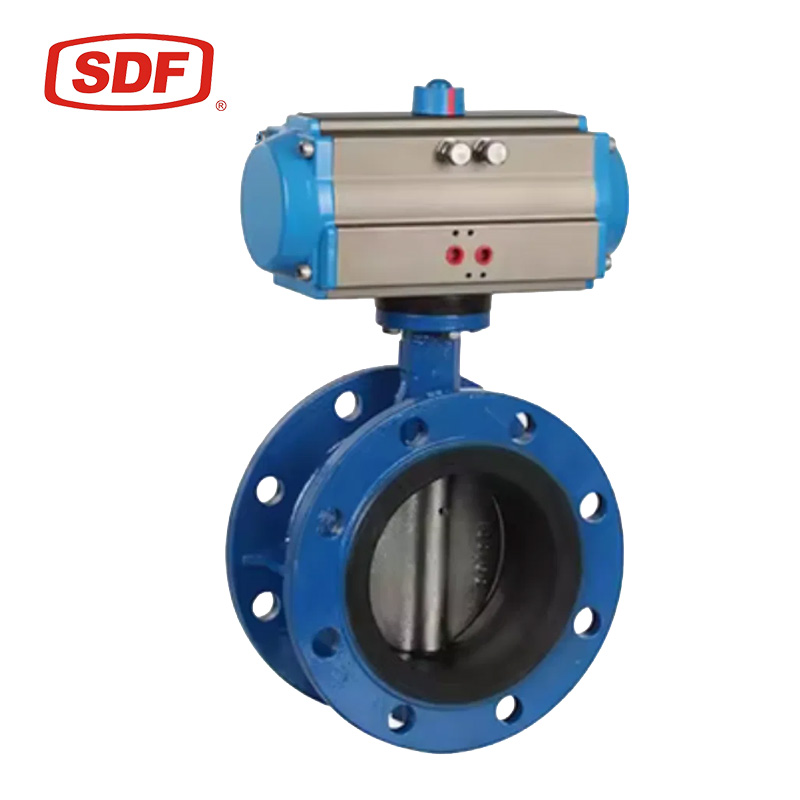
Selecting the correct mechanical design remains absolutely critical. Your specific fluid media, operating temperature range, and zero-leakage requirements dictate this choice.
Concentric / Zero Offset (Soft Seated)
This fundamental design places the stem directly in the center of the disc. We highly recommend concentric models for low-pressure municipal water systems. They work beautifully for raw wastewater and standard HVAC applications. The soft rubber seat fully lines the inner valve body. It isolates the metallic body from the fluid stream completely. This isolation prevents internal body corrosion effectively. You save money by specifying a cheaper cast iron body. However, they possess notable mechanical limitations. The disc creates continuous physical friction against the soft seat during operation. This constant rubbing leads to faster seat wear over time. Furthermore, standard rubber seats make them completely unsuitable for high-temperature steam service.
Double Offset (High Performance)
Engineers offset the central stem behind the disc and slightly to one side. We specify these rugged units for moderate pressure and temperature variations. They handle saturated steam and complex chemical processing exceptionally well. The clever offset mechanism pulls the disc away from the seat quickly. This precise action drastically reduces internal seat friction. Reduced friction extends overall service life significantly. It also allows the unit to handle much higher pressure ratings safely. The offset geometry changes the mechanical torque curve entirely. The actuator requires less force to unseat the disc initially. Lower torque requirements allow you to install smaller, cheaper actuators. You save significant overhead space on crowded industrial pipe racks.
Triple Offset (Metal-to-Metal Seated)
This advanced design adds a third geometric offset to the seating angle. You should choose this style for severe service and extreme operating temperatures. They handle abrasive slurries and strict zero-leakage requirements flawlessly. The unique cam-action seating mechanism eliminates mechanical rubbing entirely. The disc only touches the internal seat at the exact final moment of closure. Engineers machine the metal seat to incredibly tight tolerances. The sealing surfaces match perfectly at the final closing angle. This precision machining guarantees true zero-leakage performance safely. Metal seats make them highly resistant to sudden thermal shock. They handle extreme cryogenic applications effortlessly. When dealing with severe parameters, a metal-seated Flanged Butterfly Valve offers unmatched industrial durability.
You must evaluate several strict engineering parameters before issuing a purchase order. Guesswork leads directly to rapid component failure and severe safety hazards.
First, check the specific pressure-temperature ratings. You must evaluate system maximum parameters against standard ASME classes. Common industrial ratings include Class 150, Class 300, and Class 600. Your piping system's peak surge pressure must never exceed the valve's structural rating. You must also account for high-temperature de-rating factors.
Next, consult a strict material compatibility matrix. Fluid corrosion destroys incorrect metals rapidly.
Component Type | Material Options | Best Application Match |
|---|---|---|
Outer Body | Cast Iron / Ductile Iron | Basic utility, raw water, non-corrosive liquids |
Outer Body | Carbon Steel / Stainless Steel | Industrial processing, highly corrosive environments |
Internal Seat | EPDM / NBR Rubber | Standard utility fluids, HVAC loops, wastewater |
Internal Seat | PTFE (Teflon) | Harsh chemical compounds, aggressive industrial solvents |
Internal Seat | Metal (Inconel, Stellite) | High heat, abrasive slurries, high internal friction |
Selecting the wrong seat material guarantees a catastrophic pipeline leak. Always verify chemical compatibility using reliable laboratory charts.
Actuation readiness represents another critical specification step. You must size the top mounting flange correctly. The international industry standard ISO 5211 governs these exact dimensional requirements. You will mount manual gear mechanisms, pneumatic cylinders, or electric actuators here safely. Size the chosen actuator strictly based on maximum operational torque requirements. Always factor in the fluid's specific gravity and seating friction.
Finally, verify all mandatory compliance and manufacturing certifications. Check your project specifications for required regional industry standards. Look for API 609, AWWA C504, and ASME B16.5 physical compatibility. Ensure the flange drilling pattern matches your existing piping exactly. Mismatched bolt holes ruin installation schedules instantly.
Even the highest quality Flanged Butterfly Valve will fail if installed poorly. In fact, field data shows 80% of premature seat failures stem from improper installation practices.
Pre-installation checks remain absolutely non-negotiable for success. You must inspect all adjacent pipe flanges for strict parallelism. Pipe alignment requires careful laser measurement or taught string lines. Do not rely on visual estimates alone. A misalignment of just a few millimeters creates severe point loads. These point loads crack brittle cast iron flanges during tightening. Clear out any residual weld slag or metallic debris meticulously. Leftover pipeline debris will permanently score the soft valve seat during the very first operation.
Beware of the infamous "extruded seat" failure mode. Many field contractors over-tighten flange bolts aggressively. Others use completely uneven bolting torque sequences. This poor practice forces soft rubber seats to bulge outward directly into the flow path. The compressed rubber pinches tightly against the moving disc. This leads to immediate material tearing and guaranteed leakage.
Disc clearance presents another hidden operational danger. You must ensure the disc can open fully without physical obstruction. It should never strike the adjacent pipe interior. This clearance problem occurs frequently in thick-walled pipe schedules. It also happens commonly in internally lined piping systems.
Always check for correct fluid flow direction. Some internal designs are bi-directional, while others are strictly uni-directional. Emphasize the vital importance of installing uni-directional units correctly. You must position the mechanical shaft located on the upstream side.
Always use a properly calibrated industrial torque wrench.
Follow a standard crisscross or star-pattern torque sequence perfectly.
Mark each tightened bolt using a bright paint pen.
Cycle the valve manually before introducing actual line pressure.
Using standard flat gaskets on soft-seated valve designs.
Forcing a severely misaligned pipe into place using the flange bolts.
Leaving the disc in the fully open position during heavy installation.
Smart industrial procurement goes far beyond reading a basic specification sheet. You must assess actual manufacturer quality and mechanical reliability rigorously.
Look strictly for verifiable technical documentation. Demand authentic Material Test Reports (MTRs) for the outer valve body and internal disc. You also need verifiable hydrostatic and pneumatic testing certificates. A reputable industrial supplier will provide these important documents willingly. Traceability ensures every metal component matches the chemical specification perfectly. Ask your vendor for the original foundry casting certificates. Check the heat numbers stamped directly on the metallic valve body. Cross-reference these numbers with the provided paperwork. Fake test reports circulate frequently in the global valve market. Diligent verification protects your facility from catastrophic structural failures.
Vendor support determines long-term operational success. Evaluate the supplier's ability to provide exact replacement parts quickly. You will eventually need new rubber seats and packing seals. The vendor should also offer robust technical sizing support. Complex applications require deep engineering expertise, not just a simple part number. Do they understand your specific corrosive flow media? Can they calculate the exact torque safety factor for your heavy pneumatic actuator?
Focus intensely on mechanical reliability and material traceability. You want ultimate confidence when installing heavy equipment in critical infrastructure. Poor material quality directly causes catastrophic system failures. Protect your entire facility by demanding strict adherence to international metallurgical standards.
Specifying the right industrial pipeline valve requires careful analytical balance. You must weigh peak system pressure, fluid media aggressiveness, and structural pipe stress accurately. The double-flanged design provides unmatched structural rigidity for your most demanding applications. It secures your critical pipeline against heavy mechanical vibration reliably. It also enables safe, fully isolated downstream maintenance protocols.
Take deliberate action before finalizing your next major purchase order. Consult directly with a certified fluid control engineer. Review your facility's Piping and Instrumentation Diagram (P&ID) thoroughly. Always request a highly detailed technical specification sheet. Comparing these exact engineering details against your actual field conditions ensures long-term operational success. Do not cut corners on heavy-duty pipeline infrastructure.
A: Wafer valves are sandwiched between pipe flanges using long bolts. They are lighter and cheaper but highly vulnerable to pipe stress. Flanged valves have their own integral flanges bolted directly to the pipe. They are heavier and easily handle high vibration and demanding dead-end service safely.
A: Yes, but typically only between 30° and 70° open. Operating below 30° causes severe cavitation and rapid component wear. Conversely, operating above 70° offers minimal flow control. Always size the valve appropriately for your specific throttling range.
A: It depends entirely on the specific seat design. Many soft-seated flanged valves feature seats extending over the flange face, acting as the gasket natively. Metal-seated or high-performance valves typically require standard external flange gaskets for proper system sealing.
A: It must match your existing piping system exactly. Common industrial standards include ASME/ANSI (Class 150/300), PN/DIN (PN10/16/40), or JIS. Mismatched standard drillings will not bolt together, causing major installation delays and forced pipeline modifications.


