
Views: 0 Author: Site Editor Publish Time: 2026-08-05 Origin: Site
Industrial piping systems frequently face strict spatial and weight limitations. Engineers must optimize every single component. Traditional flanged ball valves remain the default for many applications. However, they add significant bulk and cost to piping networks. Evaluating a Wafer Type Ball Valve requires understanding critical engineering trade-offs. You must balance a highly compact design against structural and pressure limitations.
This guide breaks down the true performance realities. We explore the distinct advantages and exact decision criteria for specifying wafer valves in your next project. You will learn how minimal dimensions reduce structural loads. We also clarify why clamping forces dictate pressure boundaries. Finally, we map out the specific application scenarios where these compact valves excel. You can then confidently specify the right component for tight spaces and strict weight budgets.
Space & Weight Reduction: The ultra-short face-to-face dimension drastically reduces pipeline footprint and structural load.
Cost Efficiency: Less material usage in manufacturing translates directly to lower CAPEX compared to standard flanged alternatives.
Application Sweet Spot: Ideal for low-to-medium pressure systems, skid-mounted equipment, and tight manifolds.
Installation Reality: Requires precise flange alignment and bolt tensioning; not recommended for dead-end service or high-thermal-stress environments.
Engineers constantly battle space restrictions in modern industrial design. Standard flanged valves require significant pipeline real estate. They also demand heavy structural support. In modular builds or facility retrofits, finding this extra space is often unfeasible. Piping manifolds simply cannot accommodate long, bulky components.
Excessive pipeline weight creates cascading engineering challenges. Heavy valves increase the need for costly supports and structural hangers. This becomes a severe issue in offshore environments. Skid-mounted systems also suffer under extreme weight loads. Transporting and installing heavy piping modules drives up logistics expenses. Engineers must shed weight wherever possible without compromising fluid control.
High material costs inflate project budgets rapidly. Standard flanged valves require massive amounts of metal. When specifying stainless steel or exotic alloys, every extra pound impacts the bottom line. Heavy cast flanges drive up the initial purchase price. Finding a structurally sound alternative helps you control these runaway material costs.
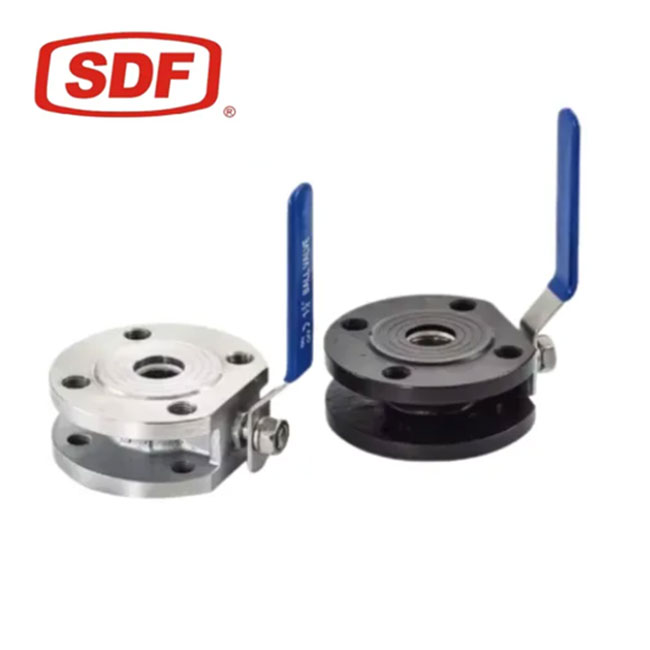
The highly compact body fits directly between pipe flanges. This design radically shortens the required installation space. It solves tight clearance issues in complex manifold designs. Engineers easily slip the valve into constrained pipeline sections. You no longer need to redesign piping layouts to accommodate standard long-pattern valves. The ultra-short profile maximizes available space in crowded mechanical rooms.
Manufacturers eliminate the integral flanges on the valve body. This design choice reduces overall weight by up to 30-50% compared to standard counterparts. A lighter pipeline demands fewer structural supports. Installation crews handle these lighter units much more safely. Reduced weight also benefits modular skid builders. They can meet strict shipping weight limits for fully assembled process units.
Less metal required in casting or forging means lower initial purchase costs. This becomes particularly beneficial when specifying high-grade alloys. Materials like 316SS, Duplex stainless steel, and Titanium cost a premium. Stripping away heavy flange material directly reduces the base component price. You achieve excellent fluid isolation properties at a fraction of the raw material cost.
This design maintains the standard quarter-turn efficiency of traditional ball valves. The internal floating ball mechanism provides a tight seal. Actuation remains exceptionally fast and highly reliable. The streamlined internal geometry often results in predictable operating torque. You can easily integrate pneumatic or electric actuators. Smaller profiles also mean smaller actuator mounting brackets, further reducing the overall assembly footprint.
Table: Performance and Structural Comparison
Comparison Metric | Wafer Design | Standard Flanged Design |
|---|---|---|
Load Distribution | Relies on pipeline flange compressive clamping force. | Distributes stress through integral valve flange necks. |
Pressure Rating | Limited to lower pressure classes (Class 150/300). | Suitable for high pressure classes (Class 600+). |
Weight Profile | Extremely lightweight. No integral flanges. | Heavy. Includes massive cast or forged flanges. |
End-of-Line Service | Not suitable. Valve drops out if unbolted. | Highly suitable. Maintains upstream pressure safely. |
Flanged valves distribute stress safely through their own heavy flange necks. Conversely, wafer valves rely entirely on the compressive force of the adjoining pipeline flanges. Long bolts squeeze the valve body between the pipe ends. Because they lack inherent bolting structures, these units handle less internal stress. They are generally limited to lower pressure classes. Typical ratings max out at ASME Class 150 or 300, and PN16 or PN40.
Standard flanged valves allow downstream piping removal while maintaining upstream pressure. You simply unbolt the downstream side. The upstream flange remains securely bolted. Wafer units typically drop out if one side is unbolted. The long bolts span across the entire valve body. Removing the nuts on one end completely eliminates the clamping force. This makes them unsuitable for end-of-line isolation. You must use specific lugged modifications if dead-end service is necessary.
Standard flanged bodies absorb pipeline flex much better than wafer bodies. Thermal expansion pushes and pulls on the piping system. A standard valve handles these loads through thick bolting points. Wafer bodies rely on long, exposed studs. Extreme thermal cycling can stretch these studs over time. This stretching reduces clamping force, potentially causing external leakage. Wafer valves can also experience internal binding if thermal expansion severely distorts the pipe alignment.
Engineers confidently select a Wafer Type Ball Valve for highly specific environments. Space and weight must dictate the design parameters. Consider specifying them in the following scenarios:
Modular Process Skids: Dense equipment layouts demand hyper-compact piping components.
Commercial HVAC Systems: Chilled water lines in tight ceiling drops benefit from short face-to-face dimensions.
Water Treatment Facilities: Low-pressure chemical dosing lines require exotic alloys, making weight reduction critical for cost savings.
Tight-Clearance Retrofits: Replacing old butterfly valves often leaves very little room. A compact ball valve slips into these exact gaps.
Weight-Restricted Platforms: Marine vessels and offshore platforms use them as a primary metric for success. Less weight equals better fuel efficiency and buoyancy control.
You must avoid these components when system dynamics threaten structural clamping forces. Do not use them in the following situations:
High-Pressure Steam Lines: Steam systems demand robust structural integrity and high-pressure retention capabilities.
Systems with High Vibration: Continuous shaking can loosen long spanning bolts. This quickly leads to catastrophic flange leaks.
Massive Thermal Expansion: Extreme temperature swings stretch the bolting hardware. Loss of compressive tension will compromise the gasket seal.
Frequent Downstream Maintenance: Applications requiring the valve to serve as an end-line boundary fail immediately. You cannot remove downstream piping safely while the system is pressurized.
Installation crews must exercise extreme caution during assembly. Uneven bolt tightening causes severe valve body distortion. Because the body is relatively thin, unbalanced compressive loads can warp the internal chamber. This warping inevitably leads to internal seat leakage. You must emphasize strict adherence to standardized torque patterns. Installers should always use a star or cross-torquing sequence. Gradual tensioning ensures the body remains perfectly true between the flanges.
Keeping the valve perfectly centered during installation is notoriously difficult. Installers manually hold the heavy body while threading long bolts. If the body shifts, the sealing area becomes compromised. We highly recommend using specific gasket types to prevent extrusion. Spiral wound gaskets with centering rings work best. They provide a physical stop to keep the gasket perfectly aligned. Poor centering often forces gasket material directly into the fluid flow path, degrading performance.
You must ensure the specified unit meets exact face-to-face standards. Check your pipeline flange compatibility rigorously. ASME B16.5 governs flange dimensions in many regions. Verify your valve matches the raised face or flat face profile of the pipe. Onsite dimensional mismatch causes severe project delays. An incompatible flange face will fail to seal against the valve body. Always cross-reference the manufacturer's technical datasheets against your piping class specifications.
Wafer type ball valves offer an unmatched combination of space-saving geometry and upfront cost efficiency. They solve immense engineering headaches in modular skids and tight retrofit spaces. However, their reliance on compressive clamping force dictates strict usage boundaries. Provided your system's pressure and structural demands fall within their operating window, they are exceptional components.
Always verify the pressure class. Stick to low-to-medium pressure applications.
Never use a standard wafer design for dead-end or isolation service.
Control thermal expansion and vibration to protect the long spanning bolts.
Train installation crews on precise centering and star-pattern torque sequencing.
Before moving to procurement, cross-reference your pipeline's thermal and pressure specifications. Do not guess on structural loads. Promptly consult technical datasheets or contact a specialized valve application engineer. They will assist you with exact sizing and material selection for your next compact piping system.
A: Generally, no. Because the valve relies on the clamping force of both pipeline flanges, removing the downstream piping removes the structural integrity. The valve will simply fall out of the line. Exceptions exist for uniquely tapped "lug-wafer" hybrids, which feature threaded inserts for independent bolting.
A: They are most reliable in low-to-medium pressure applications. You will typically see them specified for ASME Class 150 to Class 300, or PN16 to PN40. Higher pressures require the integral structural strength found in standard flanged designs.
A: High thermal expansion can stretch the long bolts holding the flanges together. This stretching potentially causes a loss of clamping force, leading to external leakage. Proper bolting material selection is critical. You must often use Belleville washers to maintain tension during moderate temperature variations.


